8 Days in Kyiv
基辅八日
Medium: Digital photography
Year: 2026
07.21.2026
Today, I am in Hangzhou.
In the evening, Gloria took me to a quiet cocktail bar. The drinks were wonderful. After a while, a couple walked in. The woman was a foreigner. Gloria and the bartender exchanged a few words with her, then she turned to me and said, “She’s Ukrainian.”
I immediately told her that I would be traveling to Ukraine next week.
“Now?” she exclaimed. “Are you crazy? You could spend that money traveling somewhere else.”
I told her I was going to Ukraine to stand with its people.
She said she was from Donetsk, in southeastern Ukraine—a city now under Russian occupation, one that Ukrainians themselves can no longer freely enter. She had left Ukraine in 2021. “This is really the second war,” she said. “Russia invaded us once before, back in 2014.”
At that moment, the bartender, Xiaoyi, joined the conversation. Because of his Catholic faith, he told us, he had been quietly saving money, hoping that one day he might go to Ukraine as a volunteer. His life was busy, he said. With only a high school education, work consumed most of his days, while his friends were already close to graduating from university. Even so, he felt he ought to do something for this war.
Before we left, Xiaoyi, Gloria, and I raised a shot of Buen Amigo tequila together.
Not long ago, concerns for my own safety had filled me with hesitation about traveling to Ukraine. Tonight, though, I cannot help but wonder whether this meeting had been arranged by God. Whatever the answer, I left with a certainty I did not possess before.
The boundless distances of this world, the countless lives within it—they all have something to do with me.
07.30.2026
Today was spent almost entirely on the road, traveling from Chișinău, Moldova, to Kyiv, Ukraine. As the only Chinese passenger on the coach, I was asked to step off at the border for a separate inspection. To my surprise, the border officers were remarkably kind. By the time they finished, one of the coach company’s attendants was waving me back in a hurry—an entire busload of Ukrainians had been waiting for me for nearly half an hour.
In my rush, I forgot that my suitcase was still unzipped. As I pulled it off the inspection table, my belongings spilled across the ground. An officer bent down and helped me gather them.
Once inside Ukraine, the road stretched through vast fields of wheat, corn, and sunflowers. The bus was filled mostly with women, along with a handful of children no older than four or five. It struck me that every single day of their conscious lives has unfolded beneath the shadow of war. They have never known an Ukraine at peace.
07.31.2026
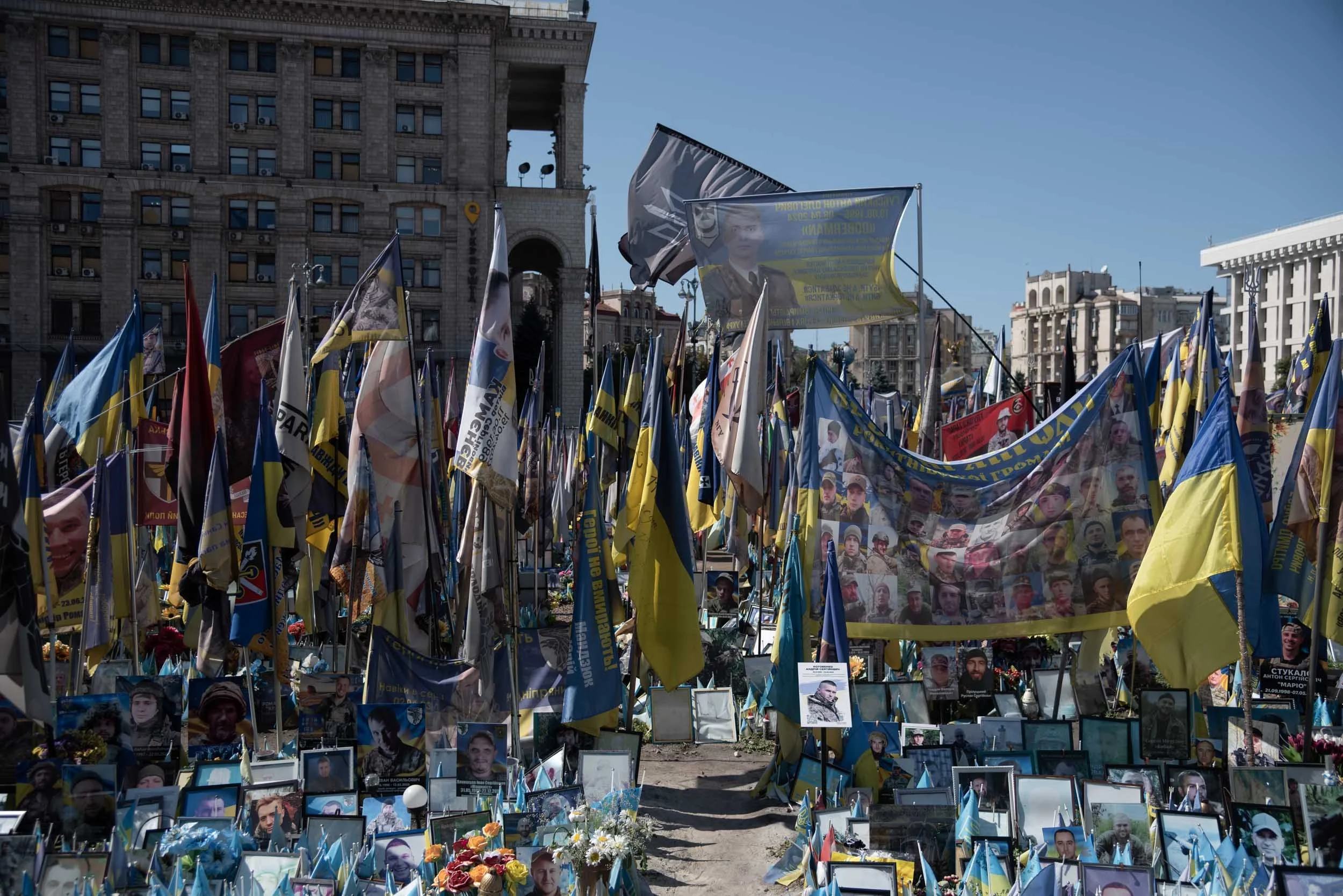
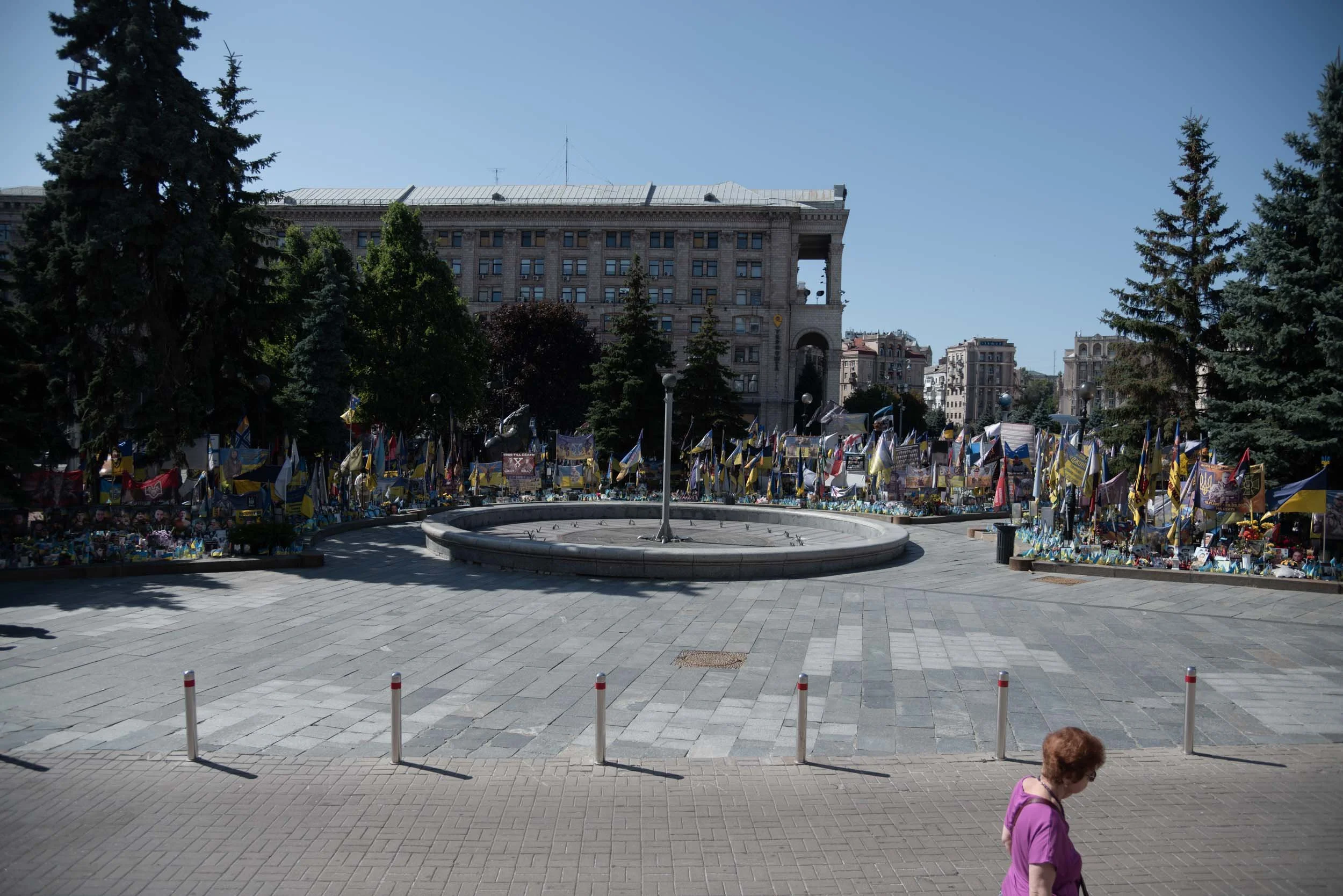
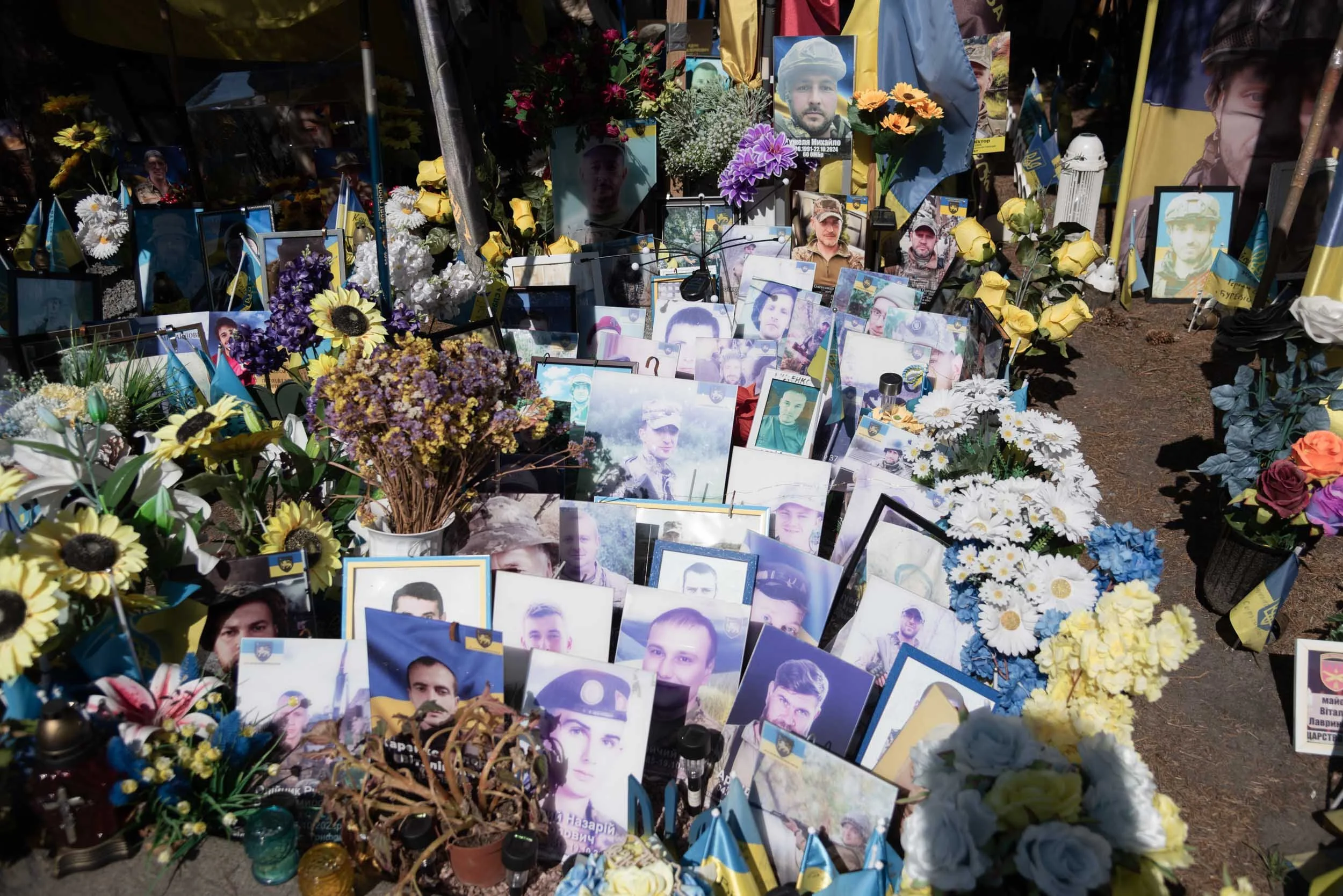
Today I visited Kyiv’s Maidan Nezalezhnosti—Independence Square. Even from a distance, I could see a vast sea of little flags. As I drew closer, I realized the entire area had become a memorial: photographs of fallen soldiers surrounded by flowers and Ukrainian flags. Many of the portraits bore birth and death dates. Some of those who had died were born in 2003 or 2004.
Among them, I even found several photographs of Chinese individuals who had joined the Ukrainian Armed Forces. Nearby, one flag carried a simple message in Chinese: “Long live the China-Ukraine friendship.”
In the afternoon, I was visiting an art museum when the long, unbroken wail of the air-raid siren drifted in from outside. The staff urged everyone to leave immediately and stay safe.
By the way, I have the Ukrainian air-raid alert app on my phone. It’s in English. When the warning is lifted, a firm voice announces: “The air alert is over. May the Force be with you.”
When I stepped back onto the street, not a single person in my sight was hurrying toward a shelter. Life simply carried on, as though nothing had happened.
Perhaps after four years, the people have grown exhausted.
08.01.2026
A little after one in the morning, I was jolted awake by a series of thunderous booms. They sounded close—perhaps Ukrainian surface-to-air missiles. I was too exhausted to think much of it. I turned over and fell back asleep.
When I checked the news the next morning, I learned that overnight Russia had struck a residential building in Kyiv. Nine people were killed.
Another air-raid alert sounded later that morning. As before, almost no one seemed to react.
By evening, the piercing explosions from the night before began replaying in my mind like a tape caught on repeat. I decided to leave my Airbnb and move into a Hyatt hotel, which has its own bomb shelter. On only my third day in Ukraine, I could already feel my resolve beginning to waver. I cannot imagine how the people of this land have endured such an existence for more than four years.
This evening, I had dinner at Hyatt’s rooftop restaurant. The hotel occupies one of the finest locations in Kyiv, beside the golden domes of Saint Sophia Cathedral. On the terrace, a good-looking DJ mixed energetic tracks while elegantly dressed guests lingered over cocktails and conversation. The sense of dissonance seeped into me like the smell of alcohol drifting through the rooftop bar. Up there, the war seemed to stop at the edge of the terrace. The suffering of more than thirty million Ukrainians suddenly felt impossibly distant, as though it belonged to another world.
I have to admit that I am not a particularly tough person. I, too, sought refuge in this sanctuary of the privileged.
“Behind vermilion gates, wine and meat go to waste; beyond them, by the roadside, lie the frozen dead.”
Earlier today, I also visited the Motherland Monument. Beneath the afternoon sun, her immense silver sword and shield caught the light, gleaming over the city.
08.02.2026
Today was spent mostly at the Kyiv History Museum.
One of the elderly women on the staff asked if I was Chinese. She asked me to write the characters for nǐ hǎo (“hello”) on the back of my ticket. Then she wanted to know how to say “goodbye” and “thank you.”
She asked what I thought about the war. I told her that I supported Ukraine, and that I did not like Russia.
I added that I hoped the war would end soon.
She lowered her head.
“Perhaps we should talk about the exhibition instead.”
Her name was Olga.
08.03.2026
This morning I visited the Saint Sophia Cathedral. It was almost empty, with barely a tourist in sight.
The cathedral was first built in the 11th Century, modeled after its namesake in Constantinople. Around 260 square meters of Byzantine mosaics and nearly 3,000 square meters of frescoes still survive within its walls. In 1240, when the Mongols captured Kyiv, the cathedral was damaged but endured. During the 17th and 18th Centuries, it was restored and transformed with elements of the distinctive Ukrainian Baroque style. In the Soviet era, when countless churches were demolished, Saint Sophia was surprisingly spared. In 2025, the blast wave from a Russian attack damaged parts of the cathedral’s exterior, though the building itself remained structurally intact.
Inside, a fragment of a cross that had been torn from the cathedral by a gust of wind on January 14, 2022 was on display—exactly forty days before Russia launched its full-scale invasion of Ukraine.
In the afternoon, I walked alongside the Dnipro river. Reeds swayed in the wind while the water flowed calmly. Yet my thoughts drifted elsewhere—to the forty days and forty nights of rain in the time of Noah.
Elijah walked for forty days to Mount Sinai before encountering God. Jesus fasted in the wilderness for forty days and nights while facing the Devil’s temptation.
What a people, so often tested by fate.
08.04.2026
This morning I visited an aquarium. I’ve always loved aquariums, but especially today. In the dim blue light, watching the marvelous movements of marine life offered a brief escape from everything waiting outside. As I walked in, the lady checking tickets smiled and put on a pirate’s hat.
The visitors were mostly children and teenagers, yet the halls were remarkably quiet. Most of the Ukrainians I have met over the past few days have been reserved. I don’t know whether that is simply part of the national character, or something the war has quietly shaped.
In the afternoon, I wandered through a forest park. Children splashed in the lake while adults sunbathed along the shore. I could not help but admire this people—their resilience, and their determination to preserve some measure of ordinary happiness in extraordinary times.
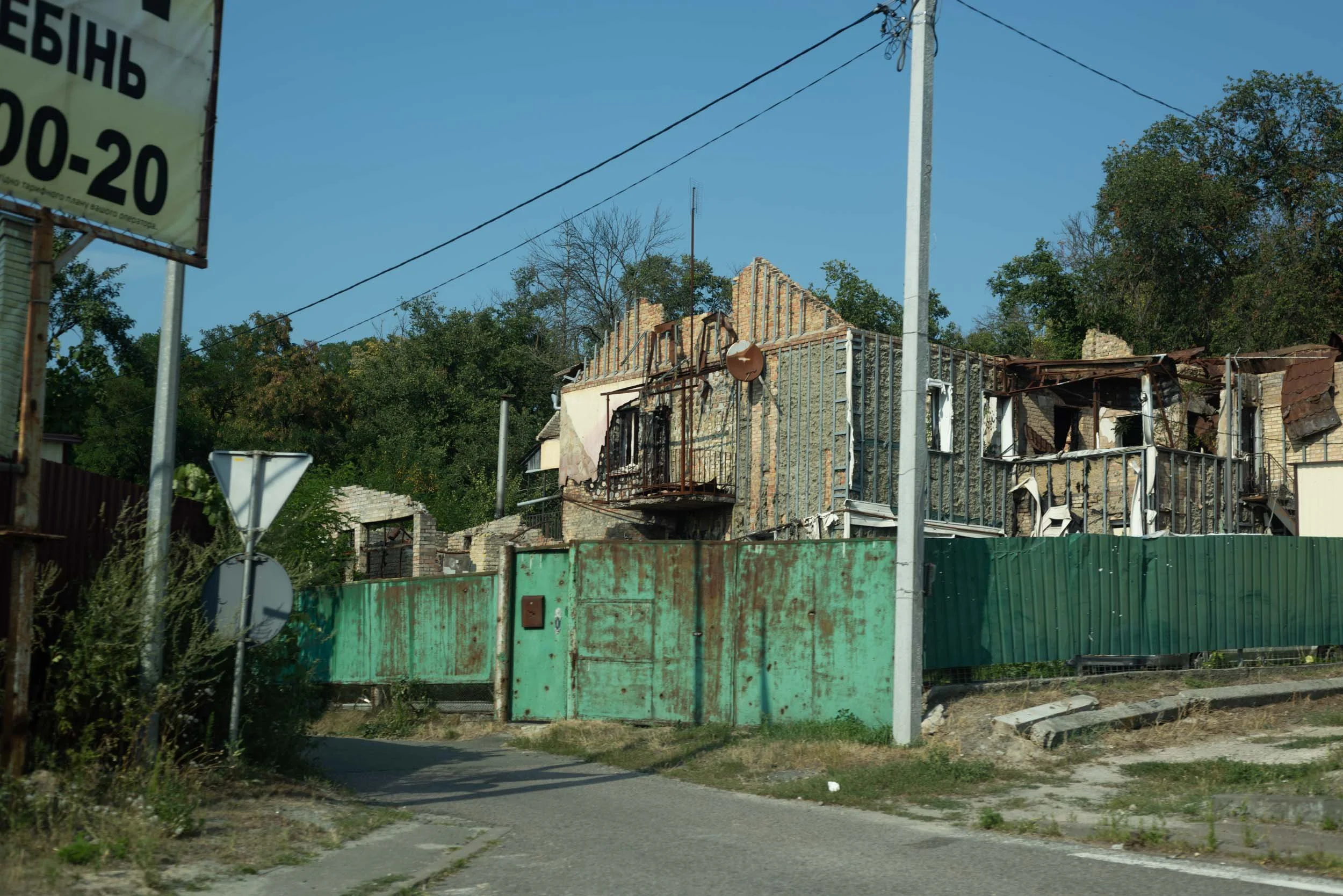
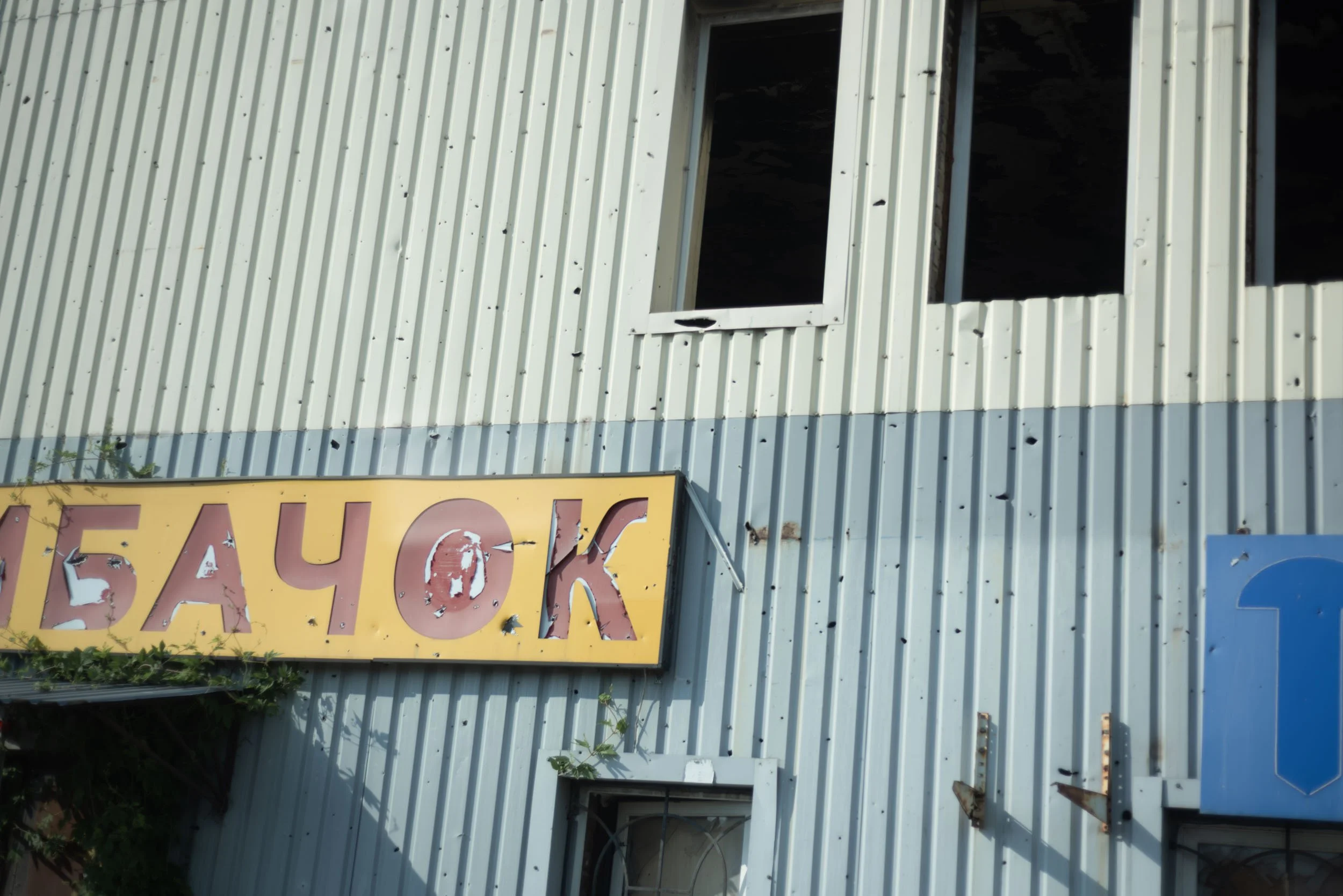
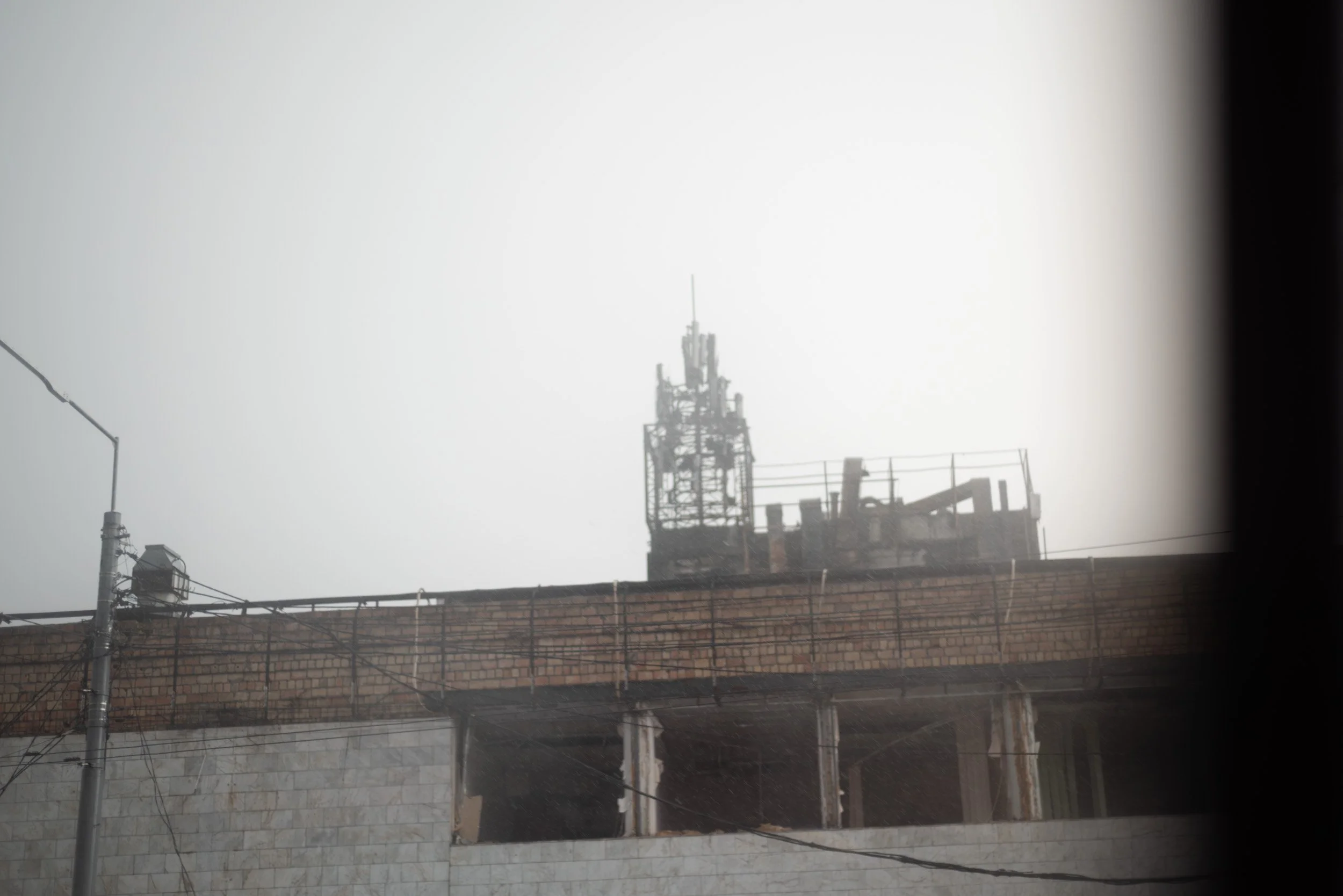
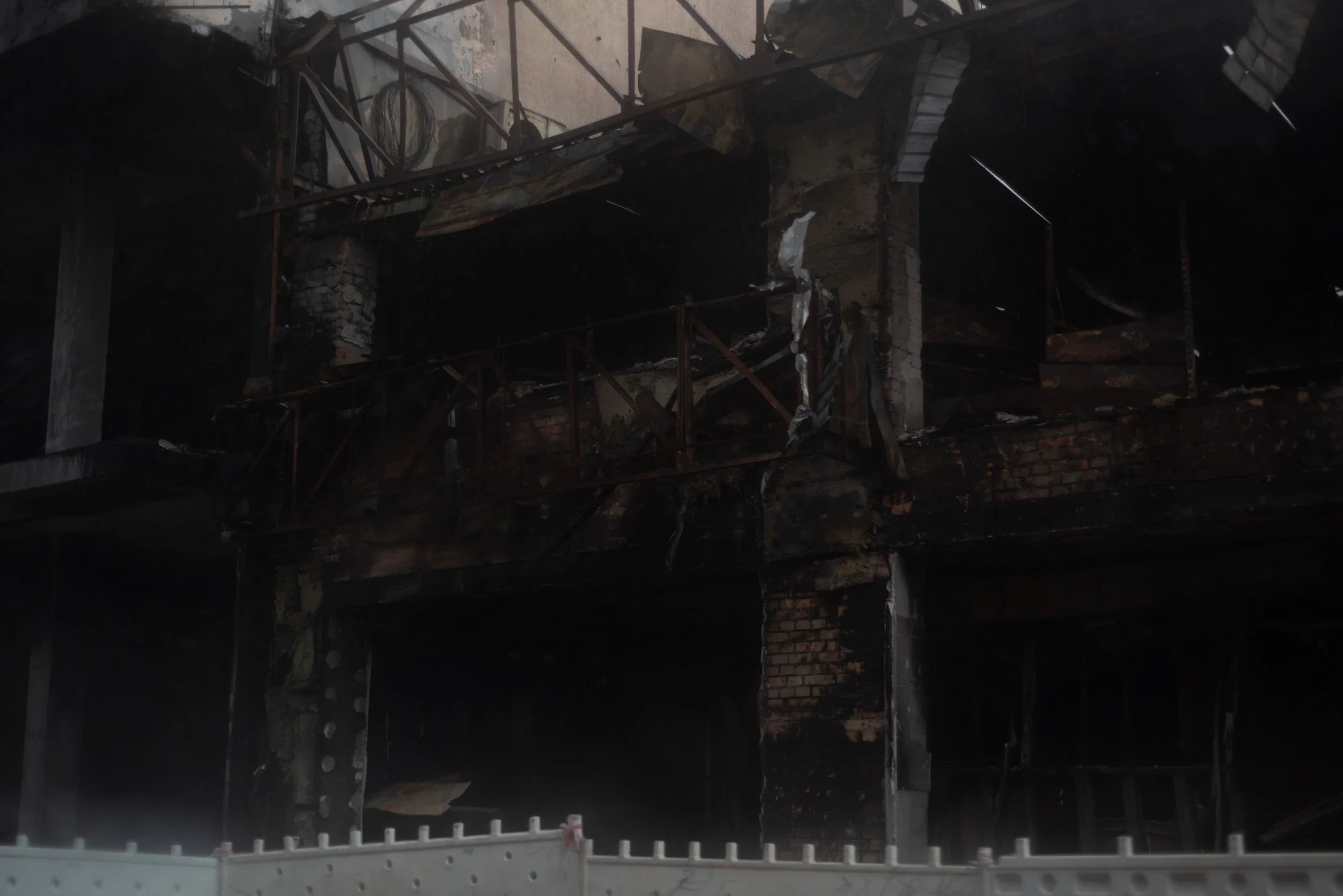
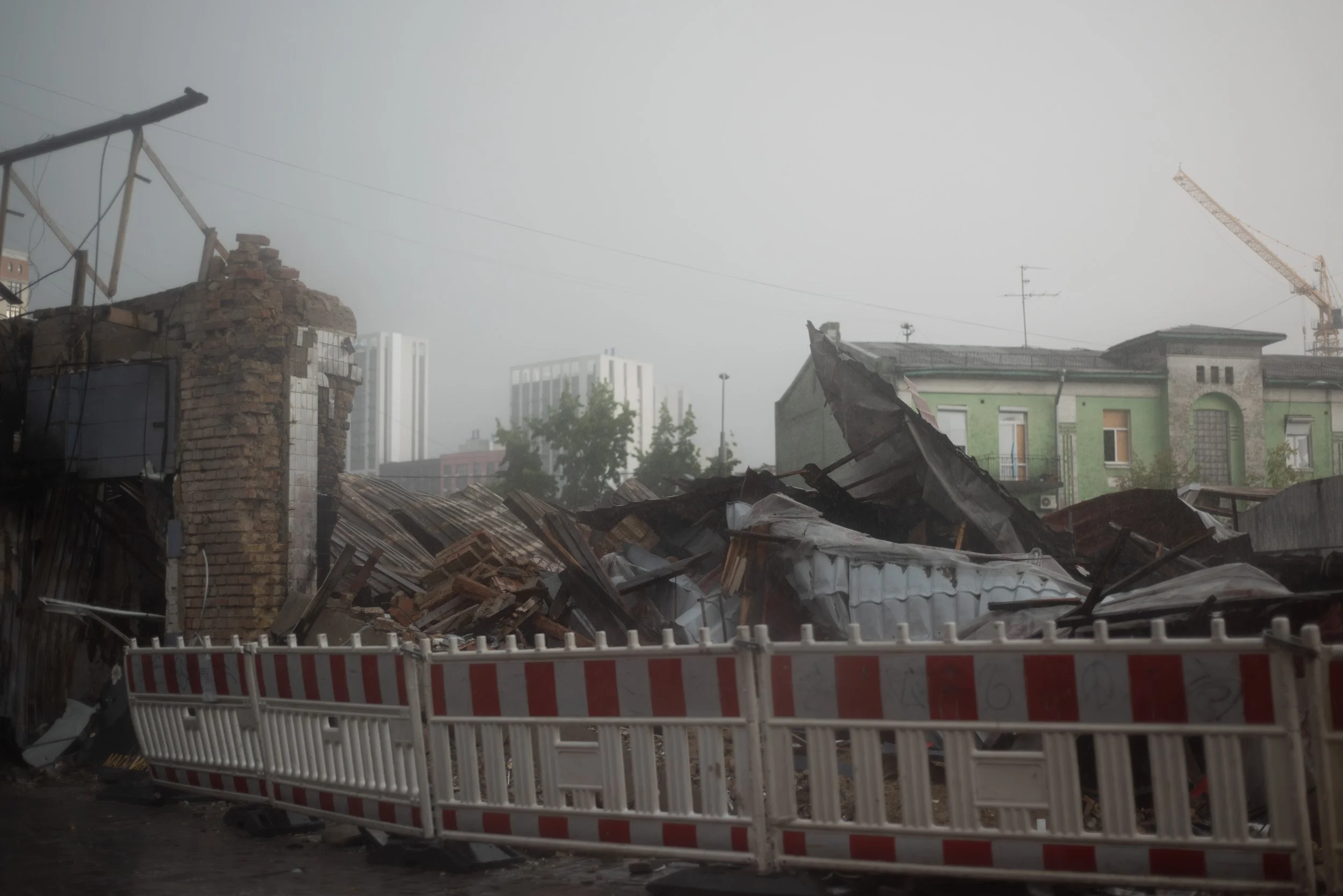
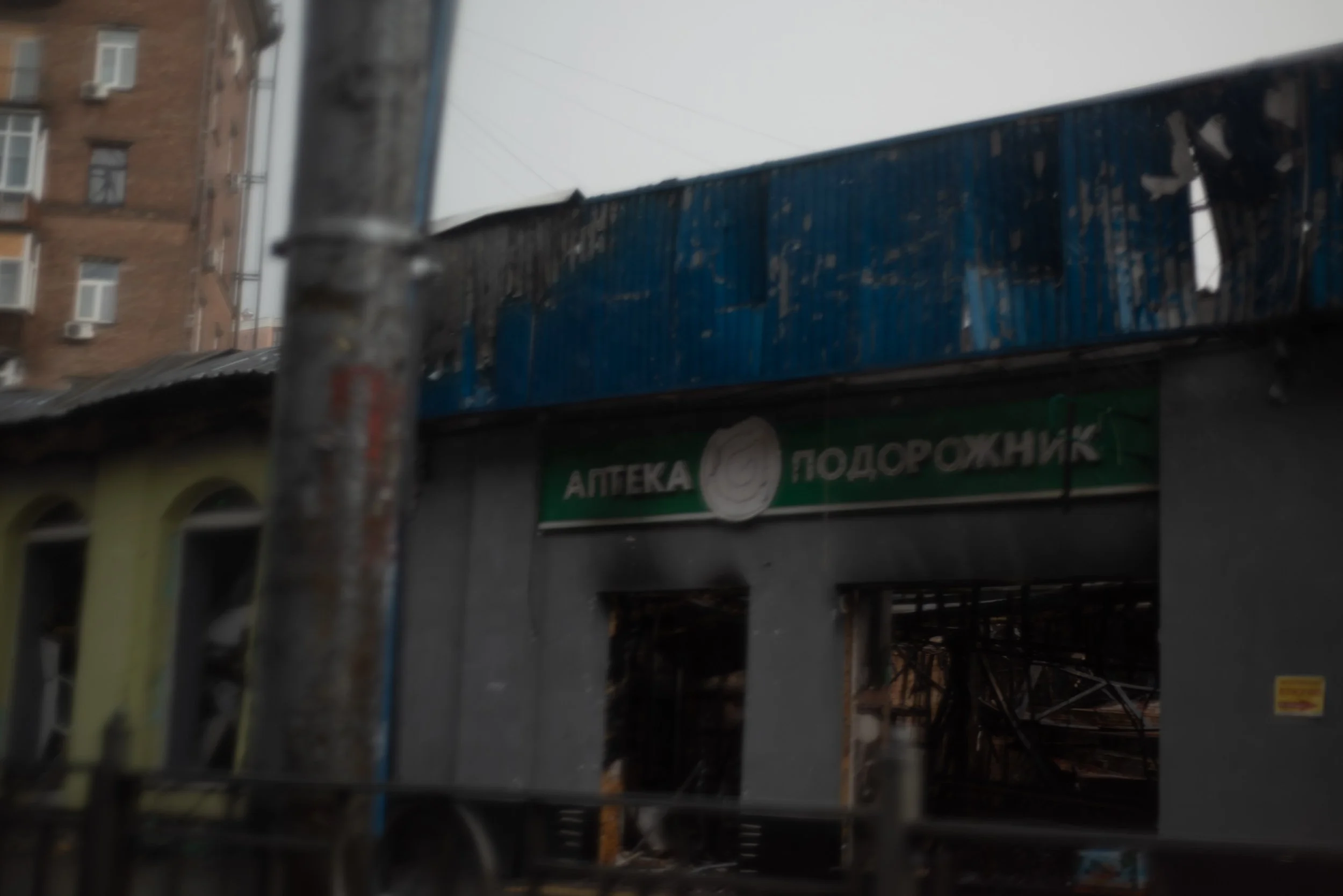
By my sixth day in Kyiv, I felt I had reached my mental limits. Multiple air-raid alerts every single day. The occasional sound of explosions. Buildings left shattered. I cannot imagine how an entire country has carried this weight for four years and five months.
Later, I traveled to Bucha. In March 2022, Russian forces occupied the town, northwest of Kyiv. During the occupation, civilians were massacred. After the town was liberated, local authorities documented 458 victims. Some were found with their hands bound behind their backs, shot at close range in the head.
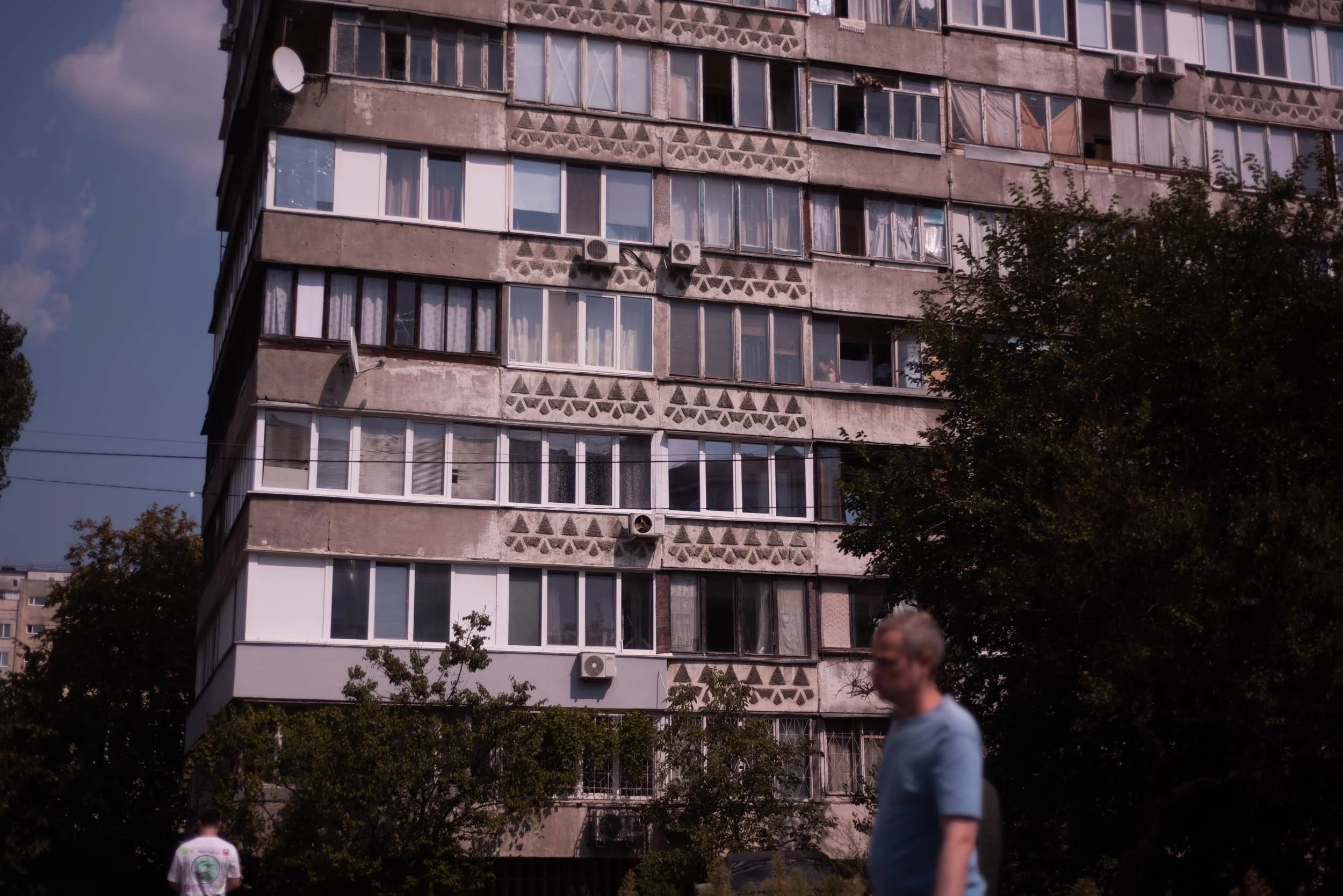
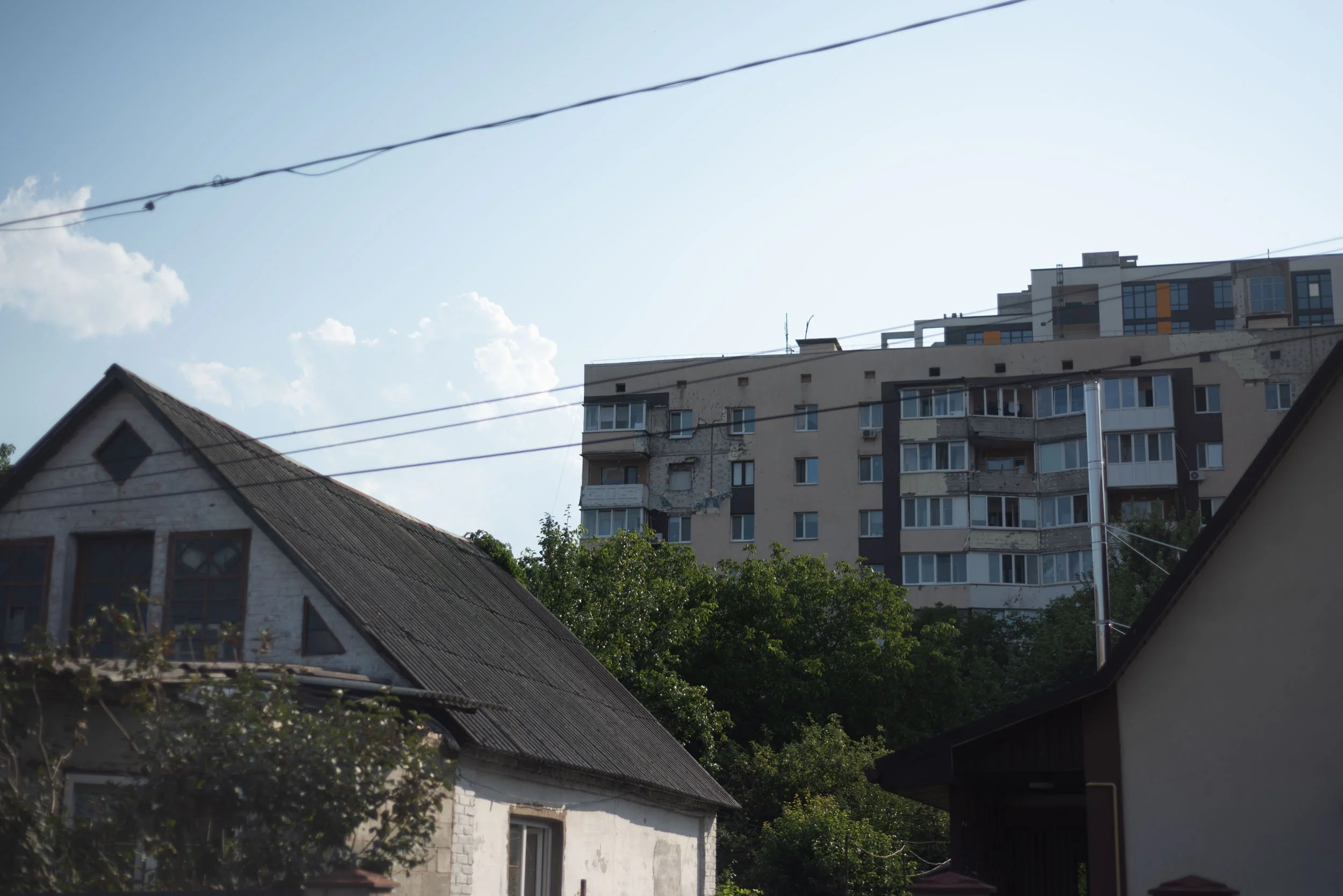
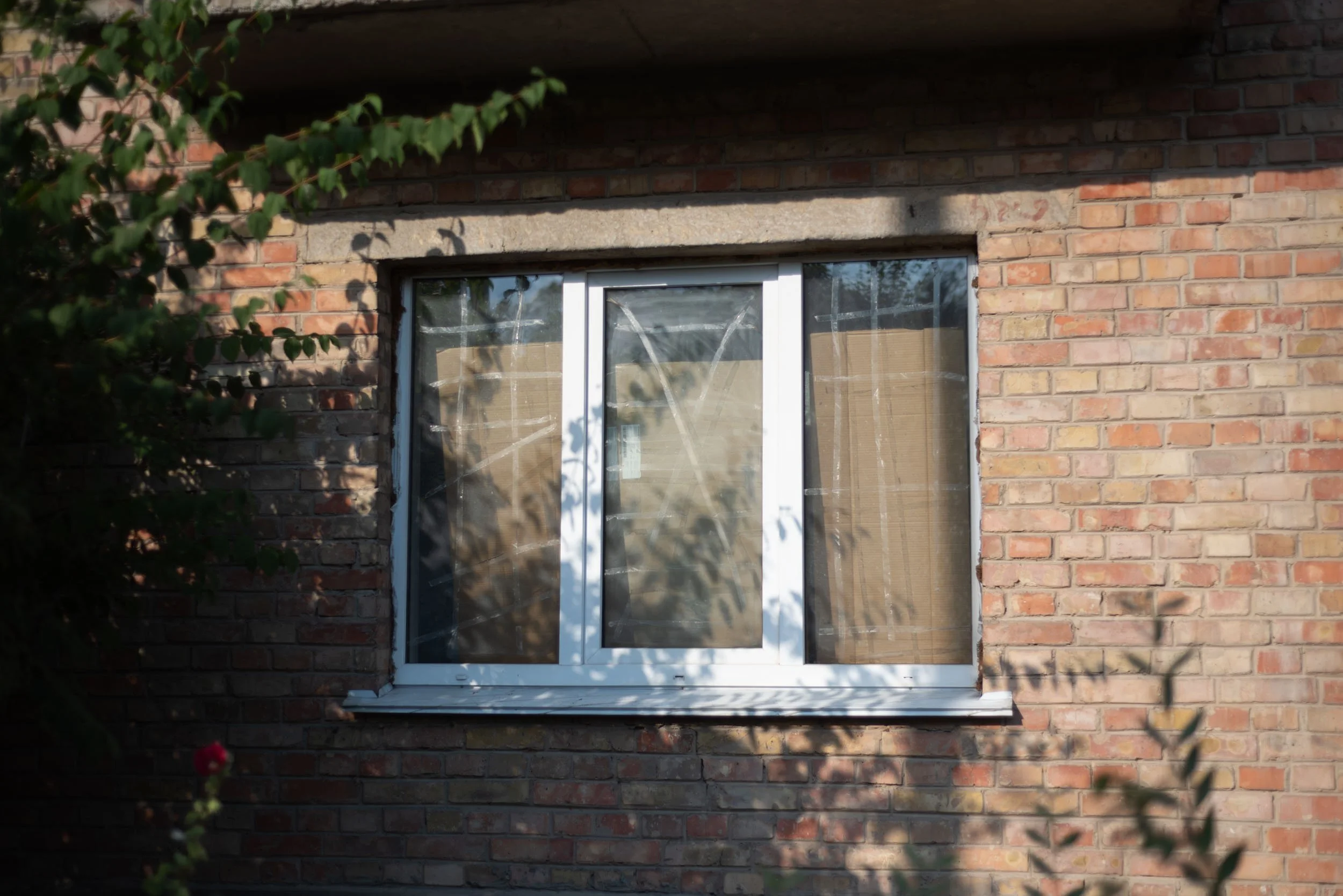
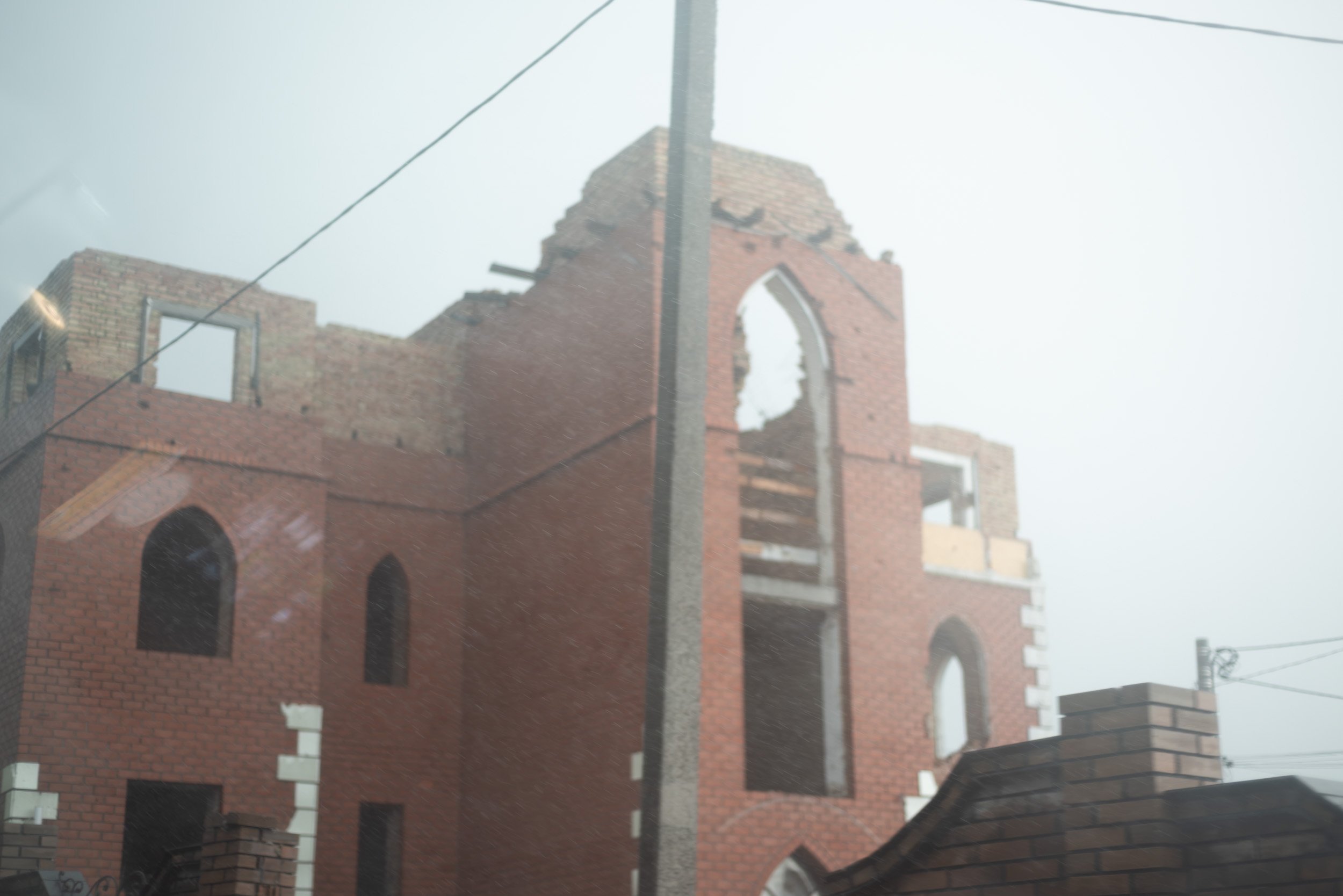
Today’s Bucha bears both scars and signs of life. I saw memorial plaques dedicated to the fallen, and apartment blocks still marked by damage. On some windows, leftover marks of X-shaped strips of tape remained—perhaps applied to help reduce the danger of shattering glass during blast waves.
Around six in the evening, dark clouds gathered over the town, and an eerie wind swept through the streets.
Then my phone sounded an air-raid alert. A deep rumble rolled in behind me.
For a moment, I thought the missiles had come.
I turned around.
It was the thunder, breaking somewhere beyond the clouds.
08.05.2026
Today, during a video call, I told my father, “I’m scared. These air-raid alerts, day after day—they’ve finally gotten to me.”
I asked him, “Why do Ukrainians keep fighting?”
He replied, “If they stop, then what?”
“If they stop, people won’t have to die anymore. At least they’ll still be alive.”
He paused for a moment.
“That’s one of the central questions people ask in every war,” he said. “Death is unquestionably a terrible thing. But surrendering, retreating—those choices can also mean losing things that are harder to recover: civilization, dignity, freedom. Forget countries for a moment. Imagine two people fighting. Why can’t they simply stop? Why can’t one side just give in? During the Sino-Japanese war, why couldn’t we surrender? Perhaps, if Kyiv continues to endure, circumstances may eventually change. Moscow, after all, is not immutable.”
I then asked how he thought this war might end. After all, for a ceasefire to happen, Putin would likely need some way to step back without total humiliation.
“Many countries and groups of people speak of peace and ceasefires. But if they themselves are not under attack or living under threat, part of them may also hope the war continues. Perhaps they want to see Russia collapse. Perhaps they have other strategic interests. From their perspective, prolonging the war may serve their own goals. As things stand, Putin has no acceptable exit at the moment.”
His words made me draw a slow breath.
It reminded me that those far from the front—the ruling class, the beneficiaries of the existing order—often try to shape events toward outcomes that serve their own interests, even when that means that countless others must continue to bear the suffering and the sacrifice.
So what do I think now? I honestly don’t know.
Instead, one line kept returning to my mind:
Life is precious; love is dear. But for freedom’s sake, both may be forsaken.
08.06.2026
Today was another day on the road.
Once again, I found myself on a coach filled almost entirely with Ukrainians. For hours, no one spoke. The silence felt familiar.
At five in the afternoon, we reached the border crossing. After waiting in line for two hours, we finally entered Moldova at half past seven.
It was as though a spell had been broken. The passengers who had sat in silence throughout the journey suddenly came to life. Conversations began. Laughter spread through the aisle. I, too, felt as though I could finally breathe without restraint.
Then my air-raid alert app sounded once more. The warning was for Odesa—only sixty kilometers behind us.
The bus kept driving toward the setting sun.
I looked straight into its fading light.
“Do not go gentle into that good night…”
07.21.2026
今天在杭州。邵老师晚上带我去了一家清吧。好喝。过了一会儿,进来一对情侣,女生是外国人。邵老师和调酒师跟她聊了两句,邵转头和我说:“她是乌克兰人!”
我忙跟小姐姐说,我下周要去乌克兰。她说:“现在?你疯了吗?你可以用这钱去别的地方玩儿!”
我说,我要去乌克兰表达我的支持。小姐姐说她来自乌克兰东南部的顿涅茨克,现在已经被俄罗斯占领,乌克兰人无法进入。她说,2021 年她就离开了乌克兰。这其实是第二场战争,俄罗斯早在 2014 年就侵略过乌克兰。这时,调酒师小以说,因为自己的天主教信仰,他在攒钱,打算有朝一日去乌克兰当志愿者。虽然高中学历的他工作很忙,朋友也都快大学毕业了,他还是觉得自己为这场战争应该做点什么。临走时,小以与我和邵老师干了一 shot 的 Buen Amigo 龙舌兰。
前段时间,出于安全考量,我对去乌克兰这件事还抱有畏惧。今夜,不知是不是上帝安排的这场会面,我变得坚定了。
无穷的远方,无数的人们,都和我有关。
07.30.2026
今天坐了一天的车,从摩尔多瓦基希讷乌到乌克兰基辅。作为整辆长途车唯一的中国人,我在边检站被叫下去单独检查。海关人员态度出奇得好。完毕后,客运公司的随车人员叫我赶紧上车—一车乌克兰人等我半小时了。急忙之下,我忘了行李箱拉链没拉,把箱子从检查台上拽下时东西掉了一地,海关人员帮我捡了一些。
在乌克兰境内,我们穿越了大片田野。有麦子,玉米和向日葵。车上女性居多,还有几个四、五岁的小孩儿。他们到现在的整个生命都是在战争中吧?
07.31.2026
今天去了基辅的独立广场。我从远处就看到了大片的小旗子。这片区域全是牺牲军人的照片、花和国旗。很多照片上写有生卒年。我看到有一些阵亡士兵是03、04年出生的。这里甚至有几个加入乌军的中国人的照片,还有一面旗子上写着“中乌友谊万岁!”
下午我在一个艺术馆。看到一半,外面传来了防空警报的长鸣。工作人员让我赶紧离开这里,并注意安全。顺便说一句,我手机上也有乌克兰防空警报 app,是英文的。警报解除时,它会铿锵有力地说:“The air alert is over. May the force be with you.”(防空警报已结束。愿原力与你同在。)
我走出艺术馆,视野里没有一个人在往防空洞跑。人们就像无事发生一样。我想四年了,他们应该累了吧。
08.01.2026
凌晨一点多被巨大的“𠳐𠳐”声吵醒了。感觉离我挺近的,可能是地对空导弹。我太困了,转过身便睡去。早上看新闻,俄罗斯夜里空袭了基辅一处居民楼,九人死亡。上午又有防空警报,不过像往常一样,人们几乎不为所动。到了傍晚,丑时刺耳的“𠳐𠳐”声在我脑海里像录音带一样回放起来。我随即从 Airbnb 转战凯悦酒店—这里有自己的防空洞。在乌的第三天,我的精神好像已经动摇了。我无法想象这片土地上的人们是如何在这般考验下坚持四年之久。
晚上,我去凯悦的屋顶餐厅吃饭。酒店选址很好,旁边就是金顶的圣索菲亚教堂。美女 DJ 在露台上打着动感的碟,零星食客穿着华丽,慢悠悠地聊着天。割裂感像鸡尾酒吧的酒精气味一样进入我身体—在这屋顶上,战争也被隔绝在外。乌克兰三千多万人的苦难,好像跟我们没有太大关系。我承认自己不是一个坚强的人,我也躲到了这个特权阶级的庇护所。
“朱门酒肉臭,路有冻死骨。”
对了,今天我还看了祖国母亲雕像,银色的长剑和盾牌在太阳下闪闪发光。
08.02.2026
今天是在基辅历史博物馆度过的。工作人员奶奶问我是不是中国人。她让我给她写“你好”,还问我再见和谢谢怎么说。
她问我对于俄乌战争怎么看,我说我支持乌克兰,不喜欢俄罗斯。我说我希望战争早点结束,她低下头。
“我们还是聊聊展品吧。”
她叫 Olga。
08.03.2026
今天上午去了圣索菲亚教堂。教堂空荡荡,基本没有游客。
圣索菲亚教堂始建于公元 11 世纪,原型为君士坦丁堡的同名教堂。此处现有约 260 平米的拜占庭马赛克和 3000 平米的壁画。1240 年,蒙古攻占基辅,教堂受损,但仍存在。公元 17 至 18 世纪经翻修,教堂加入乌克兰巴洛克风格。苏联时期,即使很多教堂被毁,圣索菲亚却幸免于难。2025 年,俄罗斯袭击冲击波损坏教堂外部,但并无大碍。
教堂里展出了一个于 2022 年 1 月 14 日被风刮落的十字架碎片—正好是俄乌战争爆发前的四十天整。
下午去看了第聂伯河。芦苇随风飘动,湖水静静地流,我却想到了诺亚时期那场下了四十个昼夜的雨。
以利亚花了四十天走到西奈山与上帝相遇;耶稣在旷野禁食四十日夜,面对魔鬼的试探。
真是个命运多舛的民族啊。
08.04.2026
我今天上午去了一个水族馆。我喜欢去水族馆,特别是今天,因为在昏暗的环境里看美丽的海洋生物会让人短暂忘记外面糟糕的一切。检票大妈看到我走进来还戴上了海盗帽子。这里小孩和青少年居多,不过大家都很沉默。这几天我遇到的大部分乌克兰人都比较内向,不知是民族性还是战争所致。
下午我去了一个森林公园。孩子在湖里戏水,大人在岸上晒太阳。我不得不敬佩这个民族,敬佩他们在困难年代的韧性和相对乐观。在基辅的第六天,我的心理素质已经被推到极限—每天数个防空警报,偶尔的爆炸声,被摧毁的建筑……我无法想象一个国家是如何在这种压力下坚持四年零五个月。
然后我去了布查。22 年 3 月,俄军占领位于基辅西北郊的布查市。其间他们对布查居民进行了屠杀。布查市政府找到 458 名遇难者,他们有的双手被反绑,头部近距离中枪。在今天的布查,我看到了阵亡将士纪念牌和局部损坏的公寓,有的窗户上有 X 形胶带的印记,可能是抵抗爆炸冲击波。
六点钟,布查市乌云密布,刮起阵阵妖风。这时手机收到防空警报,接着我的身后传来隆隆响声。
我以为是导弹来了。
转过身,原来是云层后面的雷鸣。
08.05.2026
今天视频里我跟我爸说,我怕了,天天的防空警报我怕了。我问:为什么乌克兰人还要打?
我爸:“不打的话,然后呢?”
“不打就不会有人死了。不打的话,至少人还活着。”
我爸顿了一下。“这是很多人在讨论的问题。战争中的死亡无疑是很糟糕的事情,但是放弃、退缩的话,也会失去很多东西。文明、尊严、自由……抛开国家,假设两个人在打架,他们为什么不能停下来?其中一方为什么不能认输?我们抗日的时候,为什么不能认输?也许在基辅的坚持下,事情会发生转机,莫斯科也不是一成不变的。
我又问,他对这场战争的结束怎么判断。毕竟要停战,普京也需要个台阶下。
“有的国家和团体,固然在嘴上提倡停火与和平,但是如果自己没有亲身受到伤害和威胁,也许他们心里有一部分希望战争继续。可能为了看到俄罗斯被拖垮,可能为了别的,接着打对他们来说是有利的。现在看来,普京没有一个好的台阶。”
听到这儿,我不禁倒吸一口凉气。果然,远离前线的统治阶级和既得利益者会努力让局势向着自己希望的地方发展,即使这意味着很多人的苦难和牺牲。
现在我对此怎么看呢?我不知道。不过我想到了那句话:
“生命诚可贵,爱情价更高。若为自由故,二者皆可抛。”
08.06.2026
今天又是在路上的一天。长途车上,又是一车乌克兰人。大家一路很沉默。
五点,大巴车来到边境口岸。我们排了两小时队,终于在七点半入境摩尔多瓦。好像某种魔咒解除,原本一车沉默的人忽然健谈了起来。人们说笑、吃零食,我也觉得可以肆意呼吸了。
这时,手机防空警报 app 又响了。是身后六十公里的敖德萨。
车朝着夕阳驶去。我直视太阳。
“不要温柔地走进那个良夜……”